An access control system is the first step in protecting your people, property and assets, by tracking and restricting door, gate or other entry point access to a property, building or room to authorized persons. With an access security system, you know exactly who enters a building or room, when they enter and what door they use. Access systems include analytics that allow you to track where your employees are and receive reports of suspicious activity, such as attempts to access restricted areas.
INTEGRATED PREMIUM SOLUTIONS
English

Access Control System

Key card-, key fob-, biometric- (finger print, retina scan, and etc.) or PIN-based access control systems provide you the ability to lock and unlock doors. Many organizations utilize technology cards for employee badges to track and authorize access to restricted areas.
While physical access requirements are not one-size-fits-all, IPS can leverage all access control solutions to provide a well orchestrated access control system designed for your needs.
 Proximity card systems are considered an industry standard. Featuring 125 kHz proximity technology, proximity systems work with 125 kHz technology readers and credentials — printable PVC cards, clam-shell cards, key fobs and tokens.
 Smart card systems are more secure and use enhanced 13.56 MHz read/write contactless smart card technology that can provide identification, authentication, and store information on the card because of the microchip and memory which is embedded within the smart card.
 Key access control systems reader technology for door and gate access. Key systems are popular for gyms and fitness centers with 24/7 access to members.
 Swipe card systems use magnetic (mag stripe) cards designed for basic, low security access control applications. Access is granted with the swipe of a simple magnetic stripe encoder card.
 Multi-technology access control systems are designed to simplify access control solutions and ease the transition from a magnetic stripe or proximity to smart card technology.
 Keypad access systems are simple systems that require just a PIN code. Combine keypads with access cards or credentials using multi-technology readers for improved access security.
 Biometric security access control systems use biometric devices such as fingerprint readers, retinal eye scanners, facial recognition scanners, and hand geometry readers. Unlike keys, proximity cards, smart cards, or PIN number sequences, biometric security cannot be transferred — a person must be physically present at the point of identification to gain access.
 Mobile access control systems use mobile devices, such as smartphones, tablets or wearables, to gain access to secured doors, gates, networks, services and more.
 Wireless locks provide a secure, cost effective building access control solution that eliminates the expense of running multiple long wires and door hardware modification. With a wireless access control system, no door modifications are needed and minimal wiring is required.
 Video intercom access systems are used for entry access to a multi-tenant facility. Video intercom systems not only offer two-way voice communications, but also allow visual supervision of those entering and exiting the facility.
Types of Proximity and Smart Card Credentials
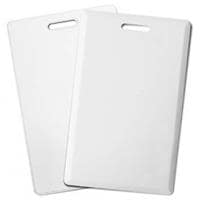
Clamshell Cards
Clamshell cards are the industry choice for a cost-effective solution to access control. These cards are generally thicker than normal 30mil cards.
PROS
- Often can be re-used
- Most affordable
- Durable
CONS
- Cannot print on ID card printer
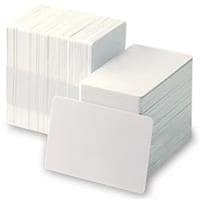
ISO PVC Cards
A standard prox card is made from white PVC and the same size as a CR80 ID card. These can be printed on with a direct-to-card ID card printer.
PROS
- Can double as an ID badge
- Print on ID card printer
CONS
- Not ideal for retransfer ID card printers.
- Bending can occur from overheating.
ISO Composite Cards
Composite cards are made of a combination of PVC and polyester and are better able to withstand lamination and re-transfer printing.
PROS
- Can double as an ID badge
- Best for re-transfer ID card printers
CONS
- Cost more than standard PVC cards
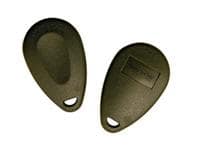
Key Fobs
Key fobs are designed to fit right on your key ring so you never are without your access control card.
PROS
- Often can be re-used
- Durable
- Easy carried
CONS
- Cost more than standard cards
- Not customization
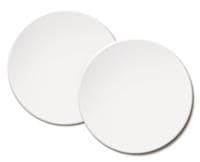
Adhesive Tags (Disks)
Adhesive tags convert objects into an access control card. These are small enough to be stuck onto an existing employee ID card, phone, or wallet.
PROS
- Turn any object into an access credential
CONS
- Cannot be reused
- Not customization
Wearable Wristbands
Wristbands offer organizations a great alternative for active users who are always on the go. Wearable are not for everyone however, so these are more considered an add-on to an existing card or fob system.
PROS
- Easy to wear
- Weather proof
- Customization
CONS
- Typically shorter lifespan
- Cost more than standard cards